
Ready Home Inspection Checklist for Dubai Buyers
A polished lobby, a marina view, or a well-staged villa can make a property feel like an easy yes. But before you commit to a Dubai home, use a ready home inspection checklist to look past the finish and assess the details that can affect your comfort, negotiating position, and future costs.
For buyers, particularly those relocating or buying their first UAE property, an inspection is not about finding a flawless home. It is about understanding condition, identifying what needs attention, and deciding whether the agreed price reflects the property you are actually buying. A small issue in an air-conditioning system, bathroom waterproofing, or balcony drainage can become much more expensive after transfer.
Start With the Building and Community
Your inspection begins before you enter the unit. The condition of shared spaces often gives useful context for an apartment or townhouse purchase. Look at the lobby, elevators, corridors, parking areas, gym, pool, and landscaping. Are they clean, working, and cared for? Is there visible water damage, chipped finishes, poor lighting, or frequent equipment downtime?
In Dubai, the lifestyle promise attached to a community is part of its value. A building with premium amenities but inconsistent upkeep may carry a different long-term appeal than its brochure suggests. Ask how common areas are managed, whether planned maintenance is underway, and what service charges cover. For investors, this is especially relevant because tenant demand depends on the day-to-day experience as much as the floor plan.
If you are viewing a villa or townhouse, inspect the approach to the home as carefully as the interiors. Check gates, paving, boundary walls, landscaping, exterior lighting, and any private pool or water feature. Heat, sand, irrigation, and normal settlement can all affect exterior finishes over time.
Ready Home Inspection Checklist: Inside the Property
Give yourself enough time to inspect the home in daylight. Do not let an agent-led viewing rush you from room to room. Open doors, test fixtures, and take notes or photos where appropriate. A professional property inspection or snagging specialist can add another layer of reassurance, particularly for older homes, recently renovated properties, and new handovers.
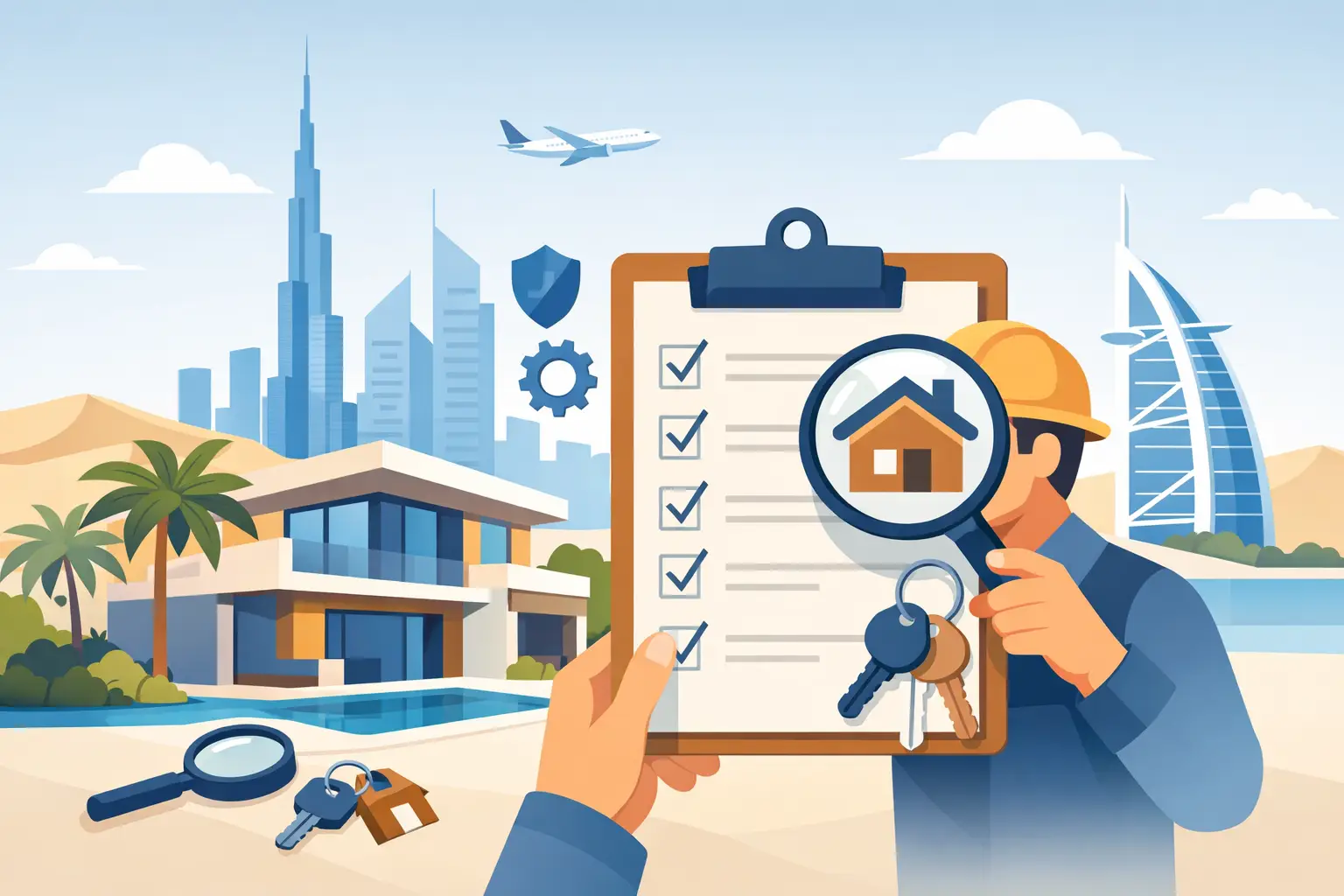
Use this practical checklist during your viewing:
- Walls, ceilings, and floors: Look for cracks, uneven tiles, peeling paint, stains, mold marks, loose flooring, or signs of previous repairs. A hairline crack may be cosmetic, while recurring or wider cracking warrants a closer assessment.
- Doors and windows: Open and close each one. Check locks, handles, seals, sliding tracks, and alignment. Poor seals can affect cooling efficiency and allow dust or moisture into the home.
- Bathrooms: Run the taps, flush toilets, inspect grout and silicone, and look beneath sinks for leaks. Check whether water drains quickly from showers and whether there are signs of dampness around the tub, vanity, or ceiling.
- Kitchen: Test cabinet doors, drawers, appliances included in the sale, exhaust fans, water pressure, and the condition of countertops. Confirm exactly which appliances, fittings, and built-in items will remain.
- Air conditioning and ventilation: Turn the AC on and listen for unusual noise. Ask when units were last serviced, whether the property uses district cooling, and whether any outstanding cooling charges apply. In the UAE climate, cooling performance is not a minor detail.
- Electrical points and lighting: Test a selection of switches and outlets, including balcony or outdoor points. Check the electrical panel for clear labeling and ask whether any electrical work was completed recently.
- Balconies, terraces, and roofs: Check drainage outlets, tile condition, railings, waterproofing signs, and exterior doors. Water pooling after cleaning or rain can signal drainage issues that should not be ignored.
- Storage, utility, and maid’s rooms: These spaces can reveal leaks, odors, poor ventilation, or overlooked wear. Open cupboards and inspect behind washing machines or water heaters where possible.
Take a measured view of what you find. Minor scuffs, old silicone, and a cabinet hinge adjustment are normal negotiation points. Persistent damp, weak AC output, faulty plumbing, or evidence of water intrusion deserve professional review before you proceed.
Ask Questions That Protect Your Position
A good viewing is not just visual. It is a fact-finding exercise. Ask the seller, landlord, or broker about the home’s history and keep the answers clear enough to verify later.
For a resale property, ask about the age of the AC equipment, water heaters, appliances, and any major renovation work. Find out whether there have been leaks, insurance claims, pest issues, or repairs to plumbing and electrical systems. If an issue has been fixed, ask what was done and whether relevant receipts or warranties are available.
You should also confirm occupancy status. Is the home vacant, owner-occupied, or tenant-occupied? If tenants are in place, understand the lease terms, notice requirements, and handover timeline before building your move-in or investment plan around a specific date.
For apartments, ask about service charges, parking allocation, storage access, building rules, and any announced capital works. For villas and townhouses, clarify responsibility for garden care, pool equipment, façade maintenance, and community-related fees. The answer can vary by development, so never assume that two similar-looking homes carry the same running costs.
Check Documents Alongside Condition
Physical condition is only one side of a smart purchase. Before committing, ensure the paperwork aligns with what you viewed and what has been represented to you. The unit number, size, parking spaces, and included features should be consistent across the relevant documents.
In a Dubai transaction, your advisor can help you understand the practical documents and process involved, including ownership records, service charge information, and any requirements for a no-objection certificate where applicable. If you are purchasing an off-plan or newly handed-over property, the developer’s defect-liability arrangements, handover records, manuals, and warranty details deserve particular attention.
Do not rely on verbal promises about furniture, upgrades, repairs, or completion dates. If a point matters to your decision, make sure it is documented through the appropriate transaction process. Clear documentation prevents last-minute misunderstandings and makes negotiations more straightforward.
Know When to Bring in a Specialist
Not every home needs the same level of inspection. A newer, well-maintained apartment may only require a careful buyer walkthrough and targeted questions. An older villa, a home with visible repairs, or a high-value luxury purchase may justify a detailed inspection by a qualified specialist.
Professional inspectors can assess areas that are difficult to judge during a standard viewing, including moisture levels, electrical safety, AC performance, roof condition, plumbing pressure, and hidden defects. Their findings can help you request repairs, renegotiate price, or simply walk away before a manageable concern becomes an expensive obligation.
For off-plan handovers, a snagging inspection is particularly useful. It creates a documented list of incomplete, damaged, or poorly finished items for the developer to address. Cosmetic snags matter, but do not overlook functional checks such as water flow, drainage, doors, power outlets, and AC operation.
Turn Findings Into a Better Decision
The purpose of an inspection is not to create friction with a seller. It is to bring clarity to a major financial decision. Once you have your notes, separate issues into three categories: items that affect safety or performance, repairs with a meaningful cost, and ordinary wear that you are comfortable accepting.
Then consider the property in context. A home in a prime Dubai location with strong long-term demand may still be the right choice even if it needs work, provided the price and timeline account for it. On the other hand, a move-in-ready premium may be worth paying when you need certainty, have limited renovation appetite, or plan to lease the property quickly.
At 360 Space LLC, we believe better property decisions come from honest advice and clear next steps, not pressure. A careful inspection gives you the confidence to negotiate intelligently, proceed with eyes open, or keep looking for a home that fits both your lifestyle and your investment goals.
The right property should still feel exciting after the doors have been opened, the taps have run, and the difficult questions have been asked.

Recent Posts