
What Does Off Plan Mean in Real Estate?
You have probably seen a Dubai listing with glossy renders, a launch price, and a handover date still a few years away. That is usually where buyers ask the same question: what does off plan mean, and is it actually a smart move?
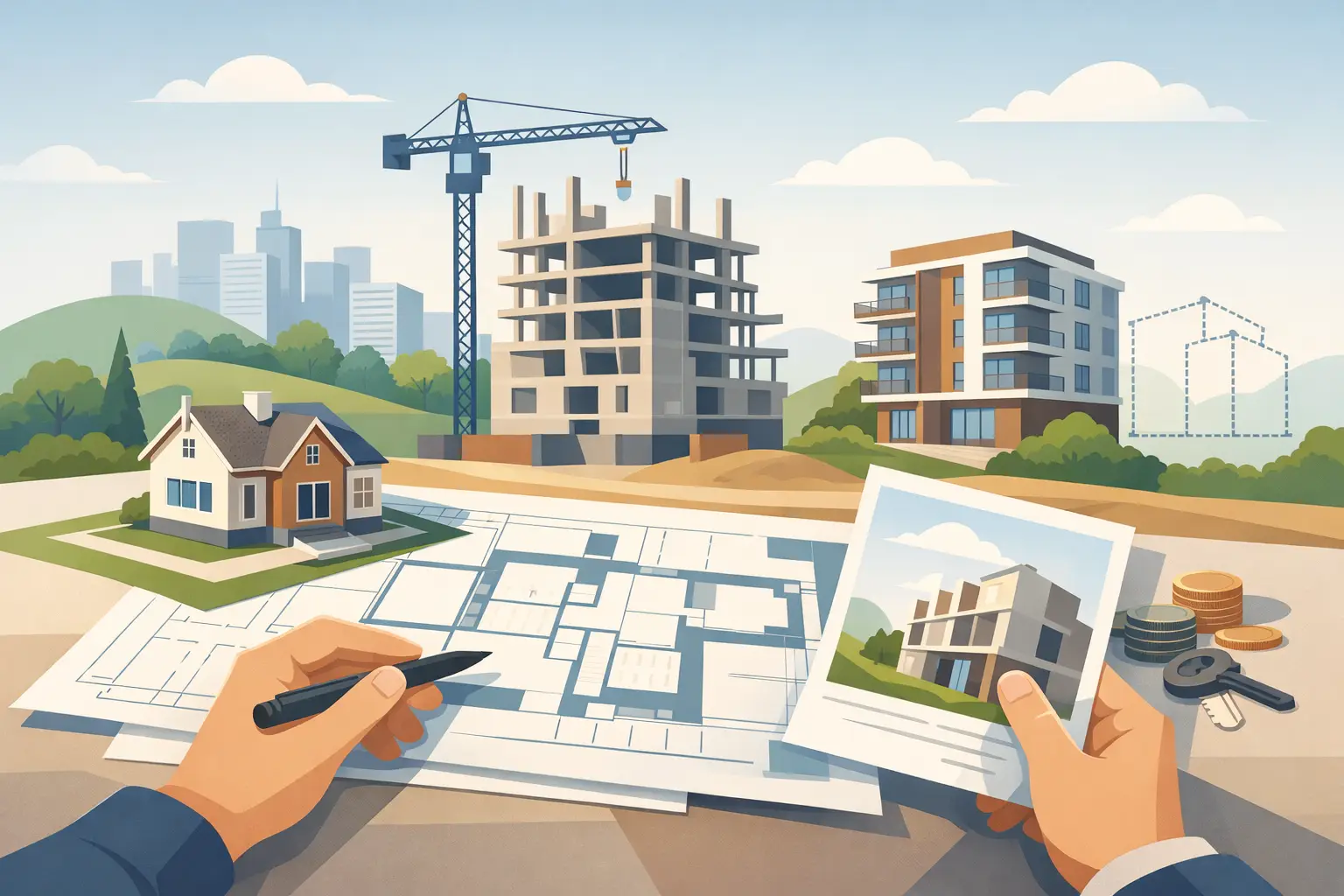
In real estate, off-plan means buying a property before it is completed, and in some cases before construction has even started. Instead of walking through a finished apartment, villa, or townhouse, you are buying based on the developer’s plans, floor plans, specifications, model units, and promised delivery timeline.
For many buyers and investors in Dubai, off-plan is appealing because it can offer lower entry prices, flexible payment plans, and access to new communities before values fully mature. But it also comes with a different risk profile than buying a completed property. The key is not just knowing the term. It is understanding how the deal works, what protections apply, and where caution matters.
What does off plan mean for a buyer?
The simplest way to understand it is this: you are reserving a future property, not purchasing a ready-to-move-in home. The developer markets the project during pre-launch, launch, or active construction, and buyers commit based on the expected final product.
That means your decision is shaped by documents and projections rather than the finished asset itself. You will usually review the unit size, layout, building amenities, payment schedule, completion date, and the developer’s track record. In many cases, the sales process moves quickly because early inventory and launch prices are limited.
This is very different from the resale market. With a completed property, you can inspect the actual condition, evaluate the building in real life, confirm rental history, and close the transaction with immediate or near-immediate possession. With off-plan, you are buying into a timeline.
How off-plan property works in Dubai
In Dubai, off-plan sales are a major part of the market, especially in newer communities and large master developments. Developers release projects in phases, often starting with a strong launch campaign, promotional pricing, and structured payment plans that make the purchase more accessible.
A buyer typically starts by selecting a unit and paying a booking amount or reservation fee. After that, the formal sale agreement is signed, and the buyer follows a payment schedule tied either to construction milestones or fixed dates. Some plans continue after handover, which can be attractive for investors managing cash flow.
The property is then delivered at handover, assuming the project progresses as planned and all contractual requirements are met. At that stage, the buyer may move in, lease the property, or hold it as a long-term investment.
This is where professional guidance matters. A polished brochure can make every project look compelling, but buyers still need to assess the fundamentals: location, developer reputation, pricing logic, likely service charges, handover realism, and long-term market demand.
Why buyers choose off-plan
The biggest advantage is often price. Off-plan units are commonly launched at lower prices than comparable completed homes in the same or nearby areas. Developers do this to create momentum, reward early buyers, and secure project sales.
Payment flexibility is another major draw. Instead of paying the full amount upfront or relying only on a traditional mortgage structure, buyers can spread payments over time. For some investors, that creates a cleaner path into the market. For end users, it can make a higher-quality community or larger unit more realistic.
There is also the appeal of newness. Off-plan properties often come with modern layouts, updated finishes, better amenities, and the lifestyle appeal of a newly built community. In fast-growing areas of Dubai, buying early can also mean participating in future appreciation as infrastructure, retail, and occupancy increase around the project.
That said, not every off-plan launch is automatically good value. Sometimes the premium for the brand, concept, or payment plan is already built into the price. A buyer should always compare the off-plan offer against completed stock nearby, not just against the developer’s marketing.
The risks behind the opportunity
Off-plan can be rewarding, but it is not risk-free. The most obvious concern is delay. Construction timelines can move, and even strong developers may face scheduling changes. If you are buying for a specific move-in date or investment return window, that matters.
There is also the issue of delivery quality. What is handed over may not feel exactly like the brochure, the show unit, or the original impression created during launch. Specifications can change within the terms of the contract, and buyers need to understand what is fixed versus what is subject to variation.
Market conditions can shift during the construction period too. A project that looks attractively priced at launch may face a softer resale or rental environment by completion. On the other hand, a strong market can work in the buyer’s favor. Off-plan always carries some exposure to future conditions.
Then there is developer risk. This is one of the biggest variables. A well-capitalized developer with a strong delivery history is very different from a less proven name with ambitious timelines. The project itself may look similar on paper, but the execution risk is not the same.
What to check before buying off-plan
If you are considering an off-plan purchase, the smartest approach is disciplined rather than emotional. Start with the developer. Look at past projects, delivery record, construction quality, and whether previous communities have held their value.
Next, assess the location beyond the launch excitement. Ask what supports demand in that area. Is it close to employment hubs, schools, transport links, retail, or waterfront access? Is the neighborhood already established, or are you betting on future growth? Both can work, but the risk level is different.
Then review the payment plan carefully. A lower booking amount can sound attractive, but the real question is whether the full structure suits your financial position. Buyers should understand every installment, registration cost, service charge expectation, and any post-handover obligations.
You should also read the sale and purchase agreement with care. This is where timelines, remedies, specifications, default terms, and handover conditions are defined. If a point feels unclear, it needs to be clarified before signing, not after.
What does off plan mean for investors?
For investors, what does off plan mean in practical terms? It means buying into projected value. You are making a forward-looking decision based on expected demand, expected appreciation, and expected rental performance at or after completion.
That can work very well in growth corridors and high-demand branded or lifestyle-led developments. Investors may benefit from early pricing, phased payments, and market uplift before handover. Some also use off-plan as a portfolio strategy, spreading capital across multiple launches rather than tying everything to one completed asset.
But projected value is still projected. Investors should be careful with overly optimistic rental estimates or resale assumptions. A sound off-plan investment is supported by real market data, not only launch-day momentum.
Off-plan vs ready property
Neither option is universally better. It depends on your goals.
If you want immediate use, immediate rental income, and full visibility on what you are buying, a ready property often makes more sense. You can inspect it, compare real transactions, and make a decision based on current facts.
If you are comfortable waiting, want staged payments, and are aiming to buy into future growth or a new development cycle, off-plan can be the stronger fit. It is often especially attractive to buyers who value new inventory and investors who want a lower upfront entry point.
The right choice comes down to timeline, risk tolerance, and strategy. A first-time buyer focused on stability may prefer completed property. A seasoned investor targeting appreciation may be more open to off-plan. Both approaches can be smart when matched to the right objective.
The bottom line on off-plan property
Off-plan means buying property before it is built or completed, based on the developer’s plans and promised delivery. In Dubai, it can be an effective way to access strong communities, flexible payment terms, and long-term upside. It can also expose buyers to delays, changing market conditions, and execution risk if the project or developer is not carefully vetted.
That is why the best off-plan decisions are not driven by hype. They are driven by clear numbers, realistic expectations, and honest advice. If a project fits your timeline, budget, and goals, off-plan can be a very smart move. If it does not, walking away is smart too.
In a market with this much choice, clarity is an advantage. The better questions you ask before booking, the better your position will be when the keys are finally ready.

Recent Posts

Villa Townhouse Comparison for Dubai Buyers