

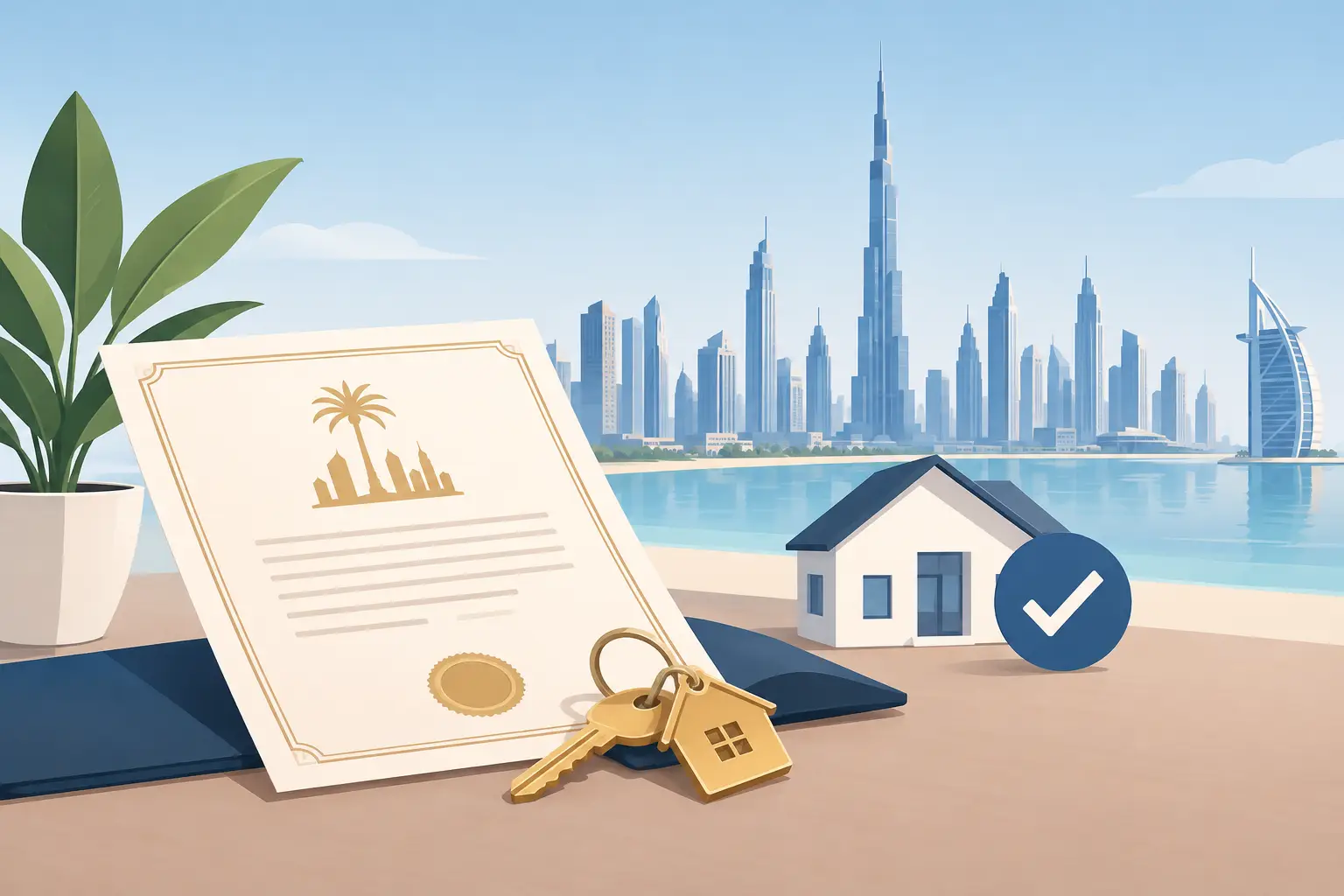
Dubai Title Deed Questions, Answered Clearly
A Dubai property can look perfect in a viewing and still require careful checks before money changes hands. The most common Dubai title deed questions are rarely about the document itself. They are about whether the seller can legally transfer the property, whether a mortgage or restriction exists, and what record proves the buyer’s ownership after completion.
A title deed is more than paperwork. It is the official ownership record issued through the Dubai Land Department system for a completed, registered property. For buyers, sellers, and investors, understanding what it confirms – and what it does not – is one of the simplest ways to reduce avoidable transaction risk.
What does a Dubai title deed prove?
A title deed identifies the registered owner of a property and records essential details, such as the property type, unit or plot number, size, location, and ownership share. It is the document that supports the owner’s legal right to sell, lease, mortgage, or otherwise deal with the property, subject to any recorded restrictions.
For an apartment, the deed normally relates to the individual unit and its associated ownership interest in the development. For villas and land, the description may refer to a plot, a villa, or both, depending on the community and registration structure. Commercial properties follow the same principle, although permitted use, licensing considerations, and fit-out approvals may need separate review.
The key point is straightforward: a brochure, reservation form, sales agreement, or payment receipt is not a substitute for a registered title deed when buying a completed resale property.
Title deed or Oqood: know which record applies
One of the most frequent points of confusion involves off-plan homes. A buyer of a property that is still under construction may not receive a final title deed at the time of purchase. Instead, the buyer’s interest is typically recorded through an Oqood registration, which is Dubai’s interim registration system for off-plan sales.
An Oqood record is meaningful. It shows that the off-plan sale has been registered and provides protection that an informal booking document cannot offer. However, it is not the same as the final title deed. The title deed is issued after the development is completed, the relevant approvals are in place, and the property can be registered as a finished unit.
This distinction matters for investors comparing an off-plan opportunity with a ready apartment. Off-plan purchases can offer payment-plan flexibility and access to emerging locations, but the timeline to final title registration depends on project completion and the developer’s registration process. Ready property offers a clearer immediate ownership position, although it may require more capital upfront.
How to verify a title deed before buying
Do not rely on a photocopy, screenshot, or verbal assurance alone. A serious buyer should verify the ownership record through the appropriate official process before signing or paying beyond the agreed transaction milestones. In a typical resale transaction, the broker and transfer trustee process help coordinate the checks, but buyers should still understand what is being confirmed.
First, ensure that the seller’s name matches the registered owner. If a representative is signing, confirm that the authority to act is valid and sufficient for the sale. This is particularly relevant where the owner lives overseas, the property is held by multiple owners, or a corporate entity owns the asset.
Next, review the property details. The unit number, building, area, and property type should match the home being marketed and the contract being signed. Small discrepancies should not be dismissed as administrative details. A mismatch can create delays at transfer and may signal that further clarification is needed.
Finally, check for financial obligations or restrictions. If the property is mortgaged, the seller’s lender must be involved in the release process before or at transfer. A mortgage does not automatically make a property unsuitable to buy, but it changes the transaction sequence. The parties need a clear, documented plan for settling the outstanding finance and obtaining the necessary release.
Dubai title deed questions buyers should ask early
The right questions at the beginning can prevent expensive pressure later. Before making an offer, ask whether the property is freehold or leasehold, whether it is currently financed, whether all service charges are settled, and whether the seller has the documents needed for transfer.
Freehold ownership generally gives eligible buyers ownership of the property and, where applicable, the land interest in designated areas. Leasehold arrangements grant rights for a defined term and can be entirely suitable depending on the property and your objectives. The difference should be understood before you compare prices, financing options, or long-term resale potential.
Ask whether the property is vacant, owner-occupied, or tenant-occupied. A title deed confirms ownership, not immediate vacant possession. If a tenant is in place, the sales contract should clearly address the tenancy, security deposit, rental payments, and handover expectations. For an investor, an existing tenant may be attractive. For an end user planning to move in, it can affect timing.
It is also wise to ask about service charges, community rules, parking allocation, and any known developer or building-management issues. These may not all appear on the title deed, yet they influence the true cost and practicality of ownership.
What happens when the property is transferred?
A Dubai resale transfer is usually completed through an authorized transfer process after the parties have met the agreed conditions. This often includes signing the sale contract, obtaining a no-objection certificate where required, arranging mortgage releases or buyer financing, and presenting the necessary documents for registration.
Once the transfer is completed and the transaction is registered, the buyer receives a title deed in their name. The exact timing and supporting documents can differ based on whether the purchase is cash-funded, financed, inherited, jointly owned, or completed by an overseas buyer using a power of attorney.
Buyers should not treat the handover of keys as the final legal milestone. Keys provide access. Registration provides ownership. Both matter, but they are not the same event.
Can a foreign buyer receive a title deed in Dubai?
Yes, foreign nationals can buy and receive title deeds for eligible properties in Dubai’s designated ownership areas. Dubai’s market remains attractive to international purchasers because the process is well established, the buyer pool is global, and freehold communities offer a wide range of homes, from central apartments to waterfront villas and investment-focused off-plan projects.
That said, eligibility relates to the specific property and ownership structure, not simply the buyer’s nationality. A clear conversation before reserving a property can confirm whether the unit is available for the intended buyer, whether the proposed ownership split is acceptable, and what identification or company documents will be needed.
Common mistakes to avoid
The costliest title deed mistakes usually come from rushing. Buyers sometimes pay a seller directly without confirming the registration path, assume an off-plan contract is a final ownership document, or overlook an existing mortgage until the deal is close to transfer.
Another common issue is buying based on a unit’s appearance rather than its legal and financial details. A renovated apartment may command a premium, but the buyer should still verify the registered property, approved alterations where relevant, building obligations, and any financing attached to the unit.
For sellers, the main risk is underestimating the preparation required. Outstanding service charges, missing documents, an unresolved mortgage, or an unprepared co-owner can slow a transaction and weaken the buyer’s confidence. Preparing early creates a cleaner sale process and stronger negotiating position.
When professional guidance adds real value
Title deed checks are not intended to make a transaction feel intimidating. They are there to make it clear. The right advisor can explain the process in plain language, coordinate with the parties involved, flag issues before they become delays, and keep the transaction focused on the agreed commercial outcome.
At 360 Space LLC, we believe property decisions should come with honest advice, not unnecessary jargon. Whether you are buying your first Dubai apartment, selling a family villa, or assessing an off-plan investment, clarity around ownership should be established before you commit.
A title deed is the finish line for legal ownership, but the best time to ask the right questions is well before the transfer appointment.

Recent Posts
Dubai Title Deed Questions, Answered Clearly